

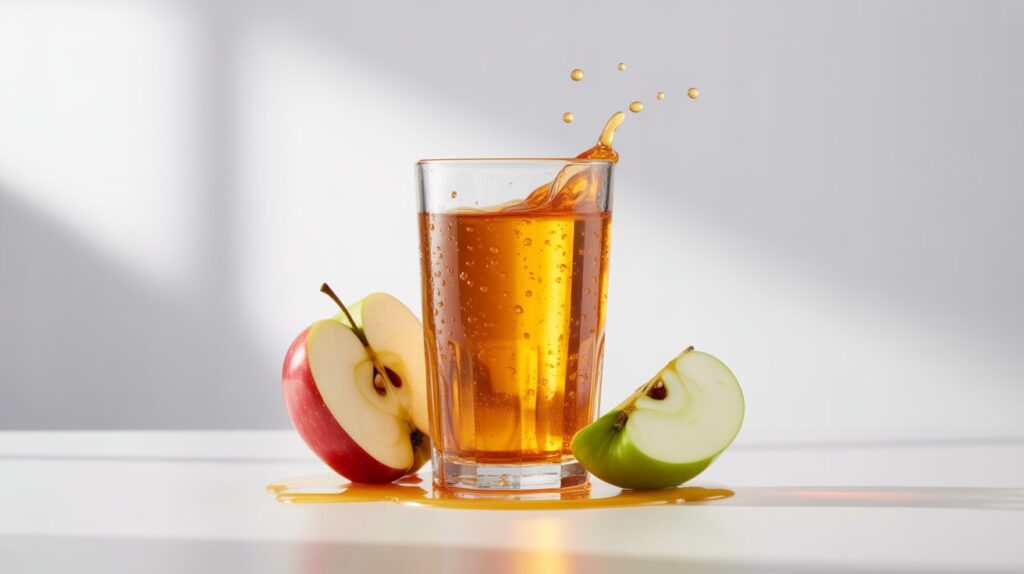
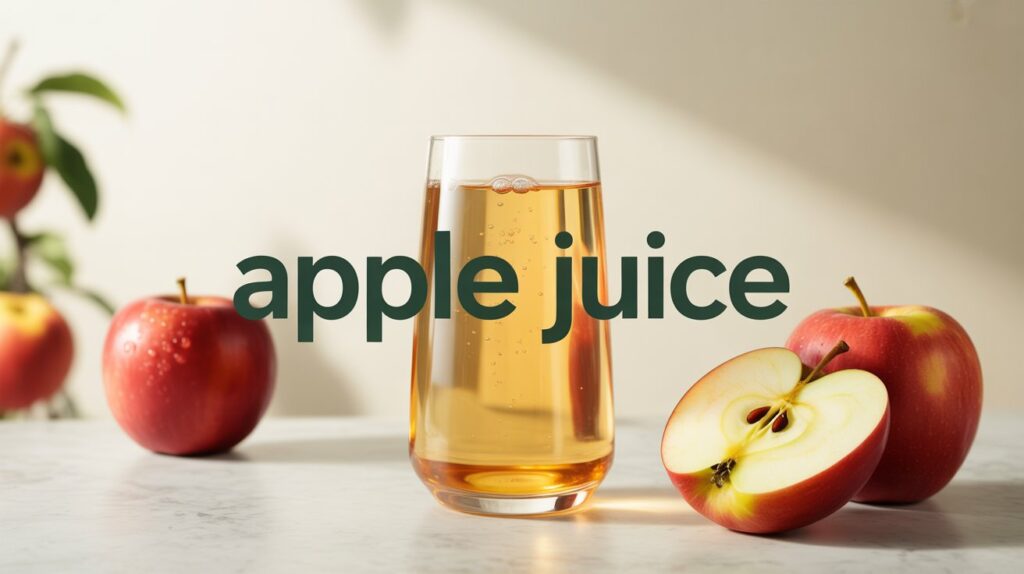
Apple juice is one of the most favourite drinks in Indian homes and all around the world. From school tiffin boxes to hospital trays this golden drink feels pure and refreshing. But is this juice really healthy or just a fruity sweet water? Many people drink this juice every day thinking that it is the same as eating a fresh apple. The truth is more interesting than you might think.
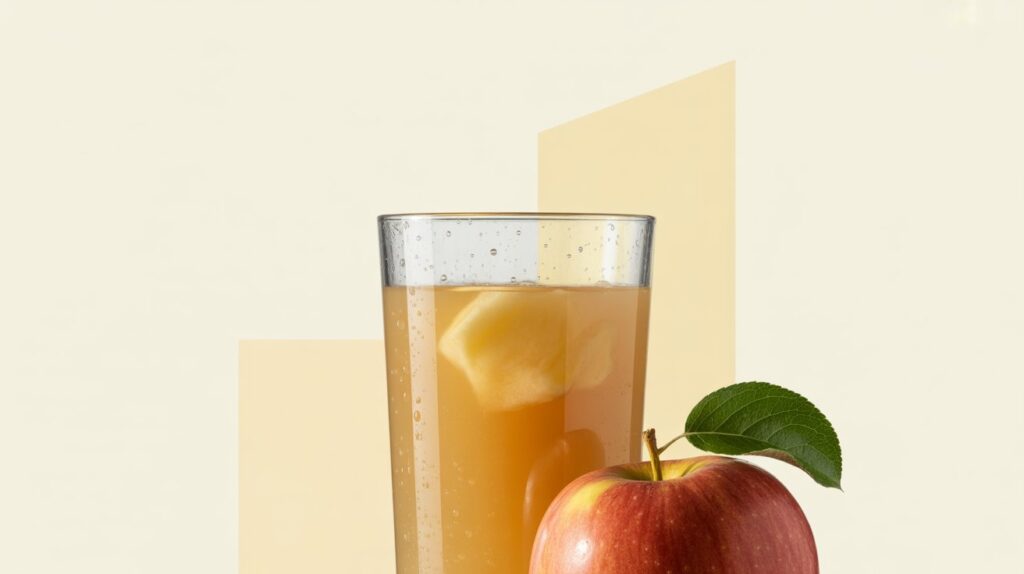
Table of Contents
Introduction
It has been a part of our daily lives for decades. Whether served while recovering from a fever, given to guests or packaged for children this juice feels safe and natural. According to a global beverage industry report fruit juice consumption crosses billions of litters every year and this juice is one of the top three fruit juices worldwide. In India too, the packaged fruit juice market is growing rapidly with increasing health awareness.
But here’s the real question. Is this juice as healthy as a whole apple? Does it aid in digestion? Is it safe for diabetes? Should children drink it every day? In this detailed guide, we’ll break down everything about this juice, including its nutrition, benefits, risks, myths, market trends and smart consumption tips. In the end, you’ll know exactly how to enjoy this juice wisely.
Nutritional Value
This juice is mainly water, natural fruit sugars and small amounts of vitamins and minerals. A 240 ml glass of apple juice typically contains about 110 to 120 calories. It contains about 24 to 28 grams of carbohydrates mostly from a natural sugar called fructose. It also contains a moderate amount of vitamin C, especially if it is fortified.
| Nutrient | Amount per 240 ml |
|---|---|
| Calories | 114 kcal |
| Carbohydrates | 28 g |
| Sugar | 24 g |
| Fiber | Almost 0 g |
| Vitamin C | 10% Daily Value |
| Potassium | 250 mg approx |
The biggest difference between this juice and a whole apple is fiber. When you eat an apple you get about 4 grams of fiber. When you drink apple juice the fiber is almost completely removed. This changes how your body responds to sugar.
Also read: 7 Powerful Facts That Make Sea Buckthorn a Miracle Superfruit
Benefits
1. Energy Boosting
Many people drink this juice when they feel tired. This makes sense because this juice contains natural sugars that enter the bloodstream quickly and provide a quick energy boost. Athletes sometimes drink diluted this juice during long workouts because it provides a quick fuel boost.
However, quick energy also means a quick spike in blood sugar. After a while energy can suddenly drop. This is why some people feel hungry again right after drinking this juice. If you compare eating an apple to drinking a glass of this juice apples keep you full for a longer period of time because of the fiber. This juice gives instant energy but does not keep you full for a long time duration.
2. Is This Juice Good for Digestion?
In Indian households, this juice is often given during times of upset stomach or indigestion. Doctors sometimes recommend drinking small amounts of clear this juice during mild dehydration because it is easy to digest. It provides fluid and simple carbohydrates.
But excess this juice can make diarrhea worse because the high fructose content can draw water into the intestines. For young children, especially those under 5 years of age, paediatricians recommend limited amounts. According to international paediatric guidelines excessive fruit juice consumption is associated with diarrhea and dental cavities in children. Moderation is important when it comes to apple juice and digestion.
3. For Heart Health
This juice contains plant compounds called polyphenols. These are natural antioxidants found in apples. Antioxidants help reduce oxidative stress in the body. Oxidative stress is linked to heart disease and aging.
Some studies have shown that cloudy this juice contains more antioxidants than clear, filtered juice. This is because processing removes many of the beneficial compounds. But keep in mind that whole apples provide more antioxidants along with fiber. Fiber plays an important role in controlling cholesterol. So while apple juice can be part of a heart healthy diet it can’t replace whole fruit.
4. For Weight Loss
Many people choose apple juice over soft drinks thinking that it will help them lose weight. It is certainly better than sugary soda because apple juice is made from fruit and contains some vitamins. But in terms of calories, a glass of apple juice can have about the same number of calories as a soft drink.
Since apple juice has almost no fiber it does not create long lasting fullness. If you drink it frequently without adjusting other calories it can lead to weight gain. If your goal is weight control eating a whole apple is a wise choice. If you still like apple juice limit it to small glasses and avoid added sugar.
5. For Diabetes
This is a very common question. Can people with diabetes drink apple juice? Apple juice is high in natural sugar and low in fiber. This means that it can quickly raise blood glucose levels. For people with diabetes or insulin resistance, large amounts are not recommended.
However, depending on blood sugar control it may be manageable to mix a small amount with water and consume with meals. It is always best to consult a doctor or dietitian. Whole apples without the peel are a safer choice because fiber slows down the absorption of sugar.
6. For Immunity
Many people drink this juice during colds and flu. This juice contains vitamin C if it is strong. Vitamin C plays a role in boosting the immune system. However, this juice alone cannot prevent infections. A balanced diet, sleep and hygiene are equally important.
Instead of relying on apple juice alone mix it with other fruits and vegetables. Variety in the diet ensures that you get a variety of nutrients. This juice can be part of a balanced plan but is not a magic solution.
Read more: Black Pepper: Why This King of Spices Is So Powerful
Types of Apple Juice in Market
Today, you’ll find many types of apple juice in the supermarket. Clear apple juice, cloudy apple juice, cold-pressed apple juice and concentrate based juice are available in the markets. Clear juice appears clear because it’s been heavily filtered. Cloudy juice appears thick because it contains more fruit particles. Cold-pressed apple juice is extracted without heat which helps retain more nutrients.
Concentrate based juice is made by removing water from the juice and then adding water back in. This processing can reduce some nutrients. When buying apple juice, always read the label carefully. Check for added sugar and preservatives. For the best quality, choose 100 percent apple juice without added sweeteners.

Recent Facts
The fruit juice industry is changing rapidly. Consumers are now opting for natural and preservative-free beverages. According to a report by Beverage Market, the demand for cold-pressed apple juice has increased in urban areas. People are more aware of products with clean labels.
There is also a growing interest in organic apple juice. Artificial pesticides can be avoided in organic farming. While organic juice can be a bit more expensive, many believe that it is safer and more environmentally friendly. Another trend is mixing apple juice with turmeric, ginger or beetroot for an extra health appeal. Functional drinks are becoming popular especially among young professionals.
Apple Juice for Children
Parents often think that this juice is a healthy daily drink for children. While it is okay to drink in small amounts, experts recommend limiting fruit juice to about 120 ml per day for young children. Excess this type of juice can cause tooth decay due to the sugar in it. Always encourage children to eat whole fruit first.
It is also a good idea to avoid giving this juice in a bottle at bedtime. The sugar stays in the mouth and increases the risk of cavities. This juice mixed with water is a good alternative. Teaching children balanced habits from a young age creates a long duration healthy lifestyle.
Homemade Apple Juice vs Packaged Apple Juice
| Feature | Homemade Apple Juice | Packaged Apple Juice |
|---|---|---|
| Freshness | Very fresh consumed immediately after preparation | Processed and stored for longer shelf life |
| Nutrient Retention | Higher if consumed immediately, especially vitamin C | Some nutrients may reduce due to pasteurization and storage |
| Fiber Content | Can retain some pulp if not filtered completely | Usually very low fiber mostly filtered |
| Added Sugar | No added sugar if prepared naturally | Some brands add extra sugar or sweeteners |
| Preservatives | No preservatives | May contain preservatives depending on brand |
| Taste and Texture | Natural, rich and slightly thicker | Uniform taste sometimes slightly diluted |
| Shelf Life | Very short must be consumed within few hours | Longer shelf life, can last months unopened |
| Cost | Cost depends on apple price, usually affordable | Slightly higher due to branding and packaging |
| Convenience | Requires time, effort and juicer | Ready to drink and easy to carry |
| Control Over Ingredients | Full control over quality and cleanliness | Depends on manufacturer standards |
| Safety | Safe if prepared hygienically | Generally safe due to quality control and pasteurization |
| Environmental Impact | Less packaging waste | Packaging waste especially plastic cartons |
Common Myths
A common misconception is that this juice is a complete detoxifier. Our liver and kidneys naturally eliminate toxins. This juice cannot replace their function. Another misconception is that apple juice is the same as eating an apple. As discussed earlier the amount of fiber makes a huge difference.
Some people believe that apple juice cures constipation. In young children the sorbitol present in apple juice can help with mild constipation. However, adults should focus more on fiber rich foods. Understanding these concepts will help you make informed decisions.
Environmental Impact
Growing apples requires water and land. Large scale production also involves packaging waste. Choosing local brands reduces the impact of transportation. Glass bottles are more environmentally friendly than plastic although they are heavier.
Some companies now use recyclable packaging and sustainable farming methods. Conscious consumers benefit the environment. Even small decisions like buying seasonal apples for homemade juice can reduce your carbon footprint.
How to Drink Apple Juice Effectively
If you love apple juice enjoy it wisely. Limit it to one small glass a day. Opt for cloudy or less processed versions. Avoid drinking apple juice on an empty stomach if you have blood sugar issues. Mix apple juice with nuts or food to reduce sugar absorption. Instead of making it a daily habit make apple juice a refreshing drink occasionally. Balance is always better than over limitation.
Insights
| Topic | Key Information | Why It Matters for You |
|---|---|---|
| What Is Apple Juice | Liquid extracted from fresh apples through pressing and filtration | Popular natural drink consumed worldwide |
| Main Ingredients | Apples, water, sometimes added vitamin C | Always check label for added sugar or preservatives |
| Calories per 240 ml | Around 110 to 120 kcal | Similar calorie level to many soft drinks |
| Carbohydrates | Around 28 grams per glass | Mostly from natural fruit sugar |
| Sugar Content | Around 24 grams natural sugar | Can raise blood sugar quickly |
| Fiber Content | Almost zero in most packaged juices | Less filling than whole apple |
| Vitamin C | Around 10 percent daily value, sometimes fortified | Important for immunity and skin health |
| Potassium | Around 200 to 250 mg | Helps maintain fluid balance in body |
| Antioxidants | Contains polyphenols especially in cloudy juice | Helps reduce oxidative stress |
| Energy Boost | Provides quick energy due to natural sugars | Good for instant refreshment |
| Hydration | High water content | Useful during mild dehydration |
| Effect on Digestion | Easy to digest in small amounts | Excess intake may cause loose motion in children |
| Impact on Blood Sugar | Can increase blood glucose rapidly | Diabetics should consume cautiously |
| Weight Management | Low satiety due to no fiber | Not ideal as daily weight loss drink |
| Heart Health | Contains plant compounds from apples | Whole apples offer more benefits |
| Best Time to Drink | Mid morning or with meals | Avoid empty stomach if sensitive to sugar |
| Children Consumption | Limit to 120 ml per day for young kids | Prevents dental cavities and sugar overload |
| Types Available | Clear, cloudy, cold pressed from concentrate | Cloudy usually retains more natural compounds |
| Homemade Version | Fresh, no preservatives, more natural taste | Best for maximum freshness |
| Packaged Version | Convenient, long shelf life | Choose 100 percent juice only |
| Shelf Life | Homemade few hours, packaged several months unopened | Storage planning is important |
| Dental Health | High sugar may increase cavity risk | Rinse mouth after drinking |
| Market Trend 2026 | Growing demand for organic and cold pressed juices | Consumers prefer clean label beverages |
| Organic Apple Juice | Made from apples grown without synthetic pesticides | Slightly higher cost but preferred by health conscious buyers |
| Environmental Impact | Packaging waste from cartons and plastic | Homemade option has lower footprint |
| Comparison with Whole Apple | Juice lacks fiber and chewing benefit | Whole fruit is nutritionally superior |
| Recommended Portion | One small glass per day for adults | Moderation prevents excess sugar intake |
| Common Myths | Does not detox body magically | Liver and kidneys naturally remove toxins |
| Who Should Avoid Excess | People with diabetes, obesity and toddlers | Requires portion control |
| Storage Tip | Refrigerate after opening and consume within 3 days | Prevents spoilage and contamination |
| Smart Buying Tip | Look for label stating 100 percent apple juice, no added sugar | Ensures better quality product |
| Overall Verdict | Refreshing and nutritious in moderation | Best enjoyed occasionally not as water replacement |
Conclusion
Apple juice looks simple, tastes sweet and is comforting. But there is science, nutrition facts and smart choices behind this golden drink. Apple juice provides quick energy and hydration which contains some antioxidants and vitamin C. At the same time it lacks fiber and is high in natural sugar.
The key is awareness. Don’t treat apple juice as a miracle health drink or a harmful villain. Understand your body, lifestyle and health status. Choose quality products, drink in moderation and choose whole fruits whenever possible.
Frequently Asked questions (FAQs)
Both apple juice and whole apples are made from the same fruit but in most cases whole apples are healthier. Whole apples contain fiber which slows down the absorption of sugar and keeps you fuller for longer. This juice contains almost no fiber and can quickly raise blood sugar levels. Choose whole apples for the most benefits. This juice can be enjoyed as a refreshing drink in small amounts occasionally.
If you are healthy and physically active you can drink a small amount of this juice every day. Drink one glass of this juice without sugar. Drinking more than this amount every day can increase calorie intake and affect weight. People with diabetes should consult a doctor before consuming it regularly. It is important to drink in moderation.
This juice is often given during fevers because it is light and easy to digest. It provides fluid and simple carbohydrates for energy. However, it should not be a substitute for proper medical treatment or a balanced diet. Diluted juice is a good alternative during illness.
This juice contains calories from natural sugars. Consuming too much without balancing it with other foods can lead to weight gain. Drinking small amounts occasionally is usually not a problem. Eating whole apples is a good option for weight control.
Most branded packaged juice is safe if made to quality standards. Always check the label for 100 percent apple juice and avoid added sugar. Store properly after opening and drink within the recommended time frame.


Hi, I’m someone who believes curiosity is where every good idea begins. Writing is my hobby & my way of exploring thoughts, experiences & the real world around me. I believe that writing has the power to inspire, inform & spark conversations. I enjoy learning, observing & turning curiosity into words that feel honest and meaningful. Stay Informed, Stay Curious!