


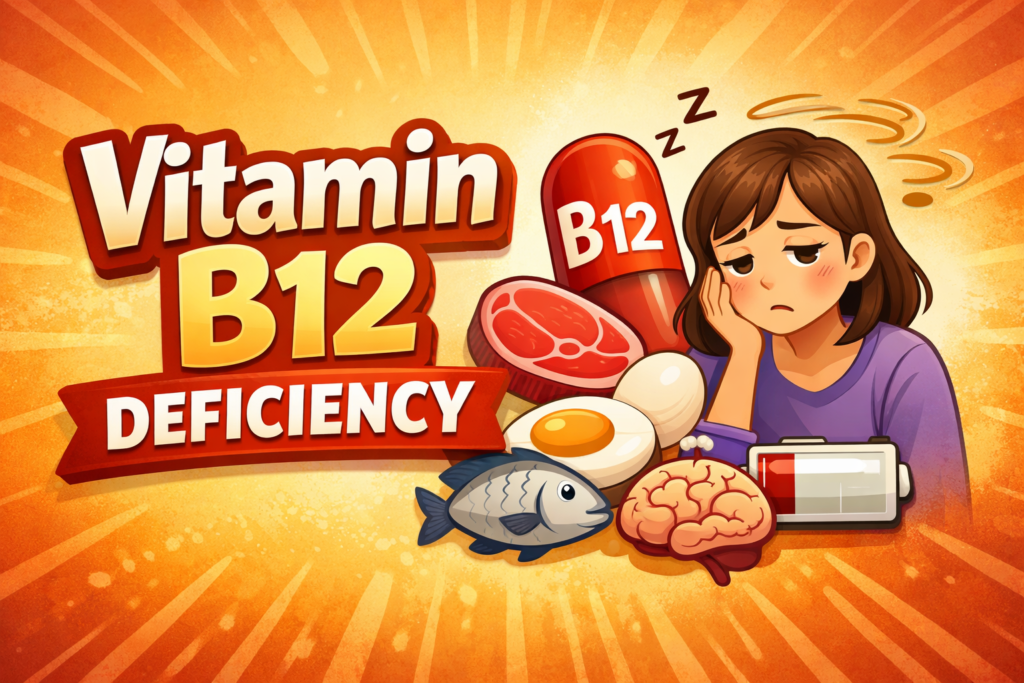
Vitamin B12 deficiency can silently sap your energy before anything goes very wrong. Simple fatigue can gradually turn into nerve damage, memory related problems and serious health risks and conditions.
Most of the people ignore the early signs and symptoms because they feel normal. Long work weeks, poor sleep, stress yet deep down in your body cells struggle to function without enough vitamin B12. This essential nutrient plays a pivotal role in making red blood cells, protecting nerves and maintaining your brain. When its levels drop significantly the body sends out signals. Many people miss them.
In recent years, the incidence of vitamin B12 deficiency has increased day by day due to changes in dietary habits, the rise of vegetarian lifestyles, intestinal disorders and long duration different types medication use. Studies have shown that up to 20 percent of adults over the age of 60 may have low vitamin B12 levels. In India and many developing countries, vegetarian populations face an even higher risk.

Table of Contents
What Is Vitamin B12 Deficiency?
Vitamin B12 deficiency occurs when your body doesn’t get enough vitamin B12 or can’t absorb it properly through foods. Vitamin B12 also known as cobalamin is a water soluble vitamin that helps make red blood cells, make DNA and maintain nerve function.
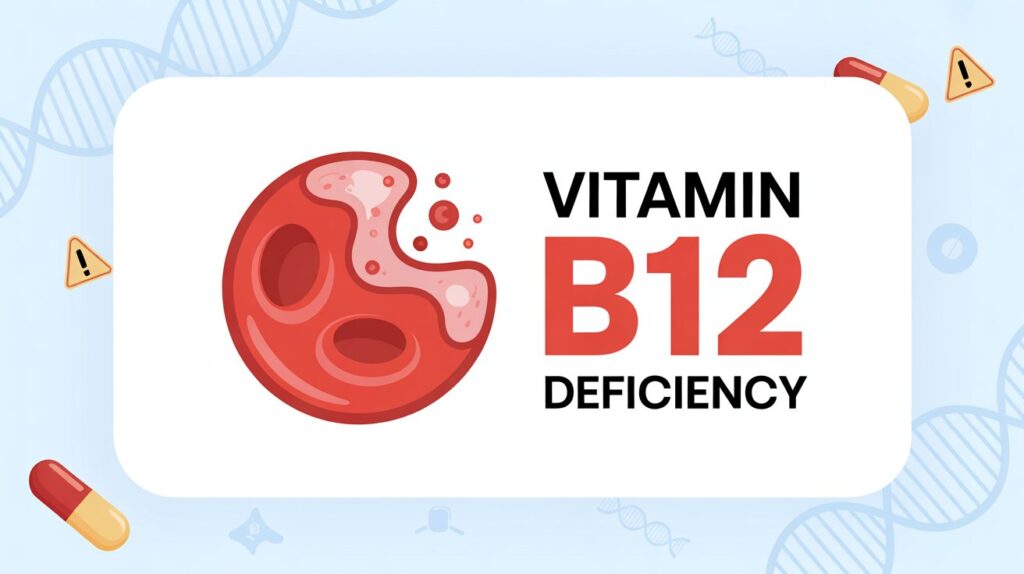
Think of your body as a factory. Red blood cells are like trucks that carry oxygen. Vitamin B12 helps build these trucks. Without enough B12 the trucks become large, fragile and ineffective. This causes a condition called megaloblastic anemia. Oxygen delivery is slowed. You feel weak and very tired.
Unlike some vitamins, B12 comes primarily from animal foods like meat, fish, eggs and dairy products. This is why strict vegetarians and vegans are at higher risk unless they take supplements or fortified foods. The body can store B12 for years. Symptoms often appear gradually, making vitamin B12 deficiency difficult to detect early.
Megaloblastic anemia is a type of anemia caused by a disruption in DNA production often due to a deficiency of vitamin B12 or folate. This results in the production of large immature red blood cells that cannot function properly.
- Red blood cells become abnormally large and fragile
- Mainly caused by a deficiency of vitamin B12 or folate
- Leads to fatigue, very weakness and pale skin
- Can cause shortness of breath and dizziness
- Can affect nerve function in cases of B12 deficiency
- Diagnosed with a blood test that shows an increase in red blood cells
- Treated with vitamin supplements and dietary modifications
Read more: Vitamin B & Vitamin C
What Is Vitamin B12?
| Category | Details |
|---|---|
| Vitamin Name | Vitamin B12 |
| Scientific Name | Cobalamin |
| Vitamin Type | Water soluble vitamin |
| Main Function | Helps form red blood cells, maintains nerve health, produces DNA, maintains brain function |
| Daily Recommended Intake (Adults) | 2.4 micrograms per day |
| Daily Requirement (Pregnant Women) | 2.6 micrograms per day |
| Daily Requirement (Breastfeeding Women) | 2.8 micrograms per day |
| Main Natural Sources | Beef liver, fish, chicken, eggs, milk, cheese |
| Plant Sources | Fortified cereals, fortified plant milk, nutritional yeast |
| Absorption Requirement | Needs intrinsic factor protein in the stomach for proper absorption |
| Stored In Body | Liver stores vitamin B12 for 3 to 5 years |
| Deficiency Risk Groups | Vegetarians, vegans, elderly, people with digestive disorders, long duration different metformin users |
| Common Causes of Deficiency | Low dietary intake, poor absorption, pernicious anemia, stomach surgery, chronic gastritis |
| Early Symptoms of Deficiency | Fatigue, weakness, pale skin, dizziness, mild memory issues |
| Advanced Symptoms | Numbness, tingling, nerve damage, depression, balance problems, severe anemia |
| Blood Test Normal Range | 200–900 pg/mL |
| Borderline Level | 200–300 pg/mL |
| Deficiency Level | Below 200 pg/mL |
| Diagnostic Tests | Serum B12 test, complete blood count, methylmalonic acid test |
| Related Condition | Megaloblastic anemia |
| Treatment (Mild Cases) | Oral B12 supplements |
| Treatment (Severe Cases) | Intramuscular B12 injections |
| Recovery Time | 4–8 weeks for mild cases, several months for nerve recovery |
| Can It Be Prevented? | Yes, through balanced diet, fortified foods, regular screening in high risk groups |
| Is It Common? | Common in elderly population and strict vegetarians |
| Possible Complications if Untreated | Permanent nerve damage, severe anemia, cognitive decline |
| Best Time to Take Supplement | Morning with food for better tolerance |
| Overdose Risk | Rare, excess usually excreted in urine |
| Role in Brain Health | Maintains nerve cells and helps prevent cognitive decline |
| Role in Energy Levels | Prevents anemia which helps maintain normal energy production |
B12 Deficiency Symptoms
Vitamin B12 affects various systems in the body. Symptoms vary depending on how severe the deficiency is. Early symptoms may seem harmless while advanced stages can be dangerous.
Common symptoms include constant fatigue, weakness, pale skin and shortness of breath. Some people notice tingling in the hands and feet. This happens because B12 protects the myelin sheath which is the protective covering around nerves. Without it nerves become dysfunctional.
Cognitive symptoms also occur. Brain fog, poor concentration and memory problems may occur. In severe cases, depression or mood swings occur. Some patients even report balance problems and difficulty walking.
| Symptom Category | Early Signs | Advanced Signs |
|---|---|---|
| Blood Related | Fatigue, pale skin | Severe anemia |
| Nerve Related | Tingling | Numbness, nerve damage |
| Brain Related | Poor focus | Memory loss |
| Digestive | Loss of appetite | Weight loss |
Ignoring these early symptoms may allow permanent nerve damage. Early diagnosis is very essential.
Also read: If You Don’t Wanna Get Cancer Before 60: Stop 9 Habits Now
Who Is Most at Risk of Vitamin B12 Deficiency?
B12 deficiency does not affect everyone equally. Some groups are at higher risk due to diet, age or medical conditions. Older adults often produce less stomach acid. Stomach acid is needed to break down B12 from food. Reduced acid means poor absorption. This condition is called atrophic gastritis and becomes more common after the age of 50.
Vegetarians and vegans are at risk because plant foods do not naturally contain B12. Fortified cereals and supplements become essential for them. People with digestive disorders such as Crohn’s disease or celiac disease may have trouble absorbing nutrients properly. People who have had weight loss surgery may also experience absorption problems.
Long duration use of different types of medications such as metformin for diabetes or proton pump inhibitors for acid reflux can interfere with B12 absorption. According to research published in the Journal of Clinical Nutrition, long time metformin use significantly increases the risk of vitamin B12 deficiency.
Atrophic gastritis is a chronic condition in which the lining of the stomach becomes thin and inflamed over time. This reduces the production of stomach acid and intrinsic factor which can affect digestion and vitamin B12 absorption regularly.
- Long inflammation damages the stomach lining
- Usually caused by autoimmune diseases or Helicobacter pylori infection
- Reduces stomach acid production
- Reduces intrinsic factor, which is needed for vitamin B12 absorption
- Can lead to vitamin B12 deficiency and anemia
- Symptoms include indigestion, flatulence and nausea
- More common in older adults
- Diagnosis is made through endoscopy and biopsy
Causes of B12 Deficiency
Vitamin B12 deficiency occurs when the body does not get enough vitamin B12 or cannot absorb it properly through foods. Several dietary and medical factors contribute to this condition.
- Low intake of animal foods such as meat, eggs and dairy products
- Strict vegetarian or vegan diet without supplementation
- Pernicious anemia affects the production of intrinsic factor
- Atrophic gastritis reduces stomach acid
- Digestive disorders such as Crohn’s disease or celiac disease
- Weight loss or stomach surgery
- Long duration use of metformin or acid reducing medications
- Chronic alcohol consumption interferes with nutrient absorption
🚩 Low B12 Intake or Poor Absorption ➡️ Reduced Red Blood Cell Production in Your Body ➡️ Nerve Damage ➡️ Anemia and Oxygen Deficiency in Your Body ➡️ Fatigue, Weakness, Tingling and Memory Problems
How Doctors Diagnose B12 Deficiency
Doctors diagnose B12 deficiency through several types blood tests. A complete blood count often reveals an enlarged red blood cell count. Deficiency is confirmed by testing serum B12 levels. Normal B12 levels are usually between 200 and 900 picograms per millilitre. Levels below 200 often indicate a deficiency. However, symptoms can occur even in borderline cases between 200 and 300.
Some doctors also test methylmalonic acid levels. Even if serum B12 appears normal, elevated levels may indicate functional B12 deficiency. Early diagnosis prevents the severe complications. If you experience persistent fatigue and a tingling sensation it is reasonable to request a B12 test.
Complications of Untreated B12 Deficiency
Vitamin B12 deficiency can cause serious health complications if left it untreated for long duration. Early signs and early diagnosis prevents from damage and improves the recovery outcomes.
- Severe anemia reduces oxygen delivery to vital organs
- Heart palpitations, weakness and shortness of breath can occur
- Chronic deficiency can cause permanent nerve damage
- Numbness and loss of sensation in the hands and feet can occur
- Increased risk of stress, depression and mood disorders
- Memory loss and cognitive decline in older adults
- Increased risk of neural tube defects during pregnancy
- Early treatment reverses most symptoms
- Long duration nerve damage may not be fully reversible
Treatment for B12 Deficiency
Treatment depends on the severity and various cause. Mild vitamin B12 deficiency can be treated with oral supplements. High dose B12 tablets are often effective in correcting levels even in cases of absorption problems.
Severe cases require intramuscular B12 injections. The injections deliver the vitamin directly into the blood, bypassing the digestive tract. Doctors may initially recommend weekly injections followed by monthly maintenance doses.
Dietary changes also play a pivotal role. Adding eggs, dairy products, fish and lean meats can increase intake. Fortified cereals provide a plant based alternative. Most patients notice improved energy within a few weeks of treatment. Nerve symptoms may take longer to improve. Consistently following medical advice will ensure recovery.
Vitamin B12 Rich Foods
Table 1: Animal Based Vitamin B12 Sources
| Food Source | Vitamin B12 (per 100g) | Key Health Benefits | Best For | Important Notes |
|---|---|---|---|---|
| Beef Liver | 70–80 mcg | Rapid correction of deficiency, improves anemia | Severe deficiency | Highest natural source of B12 |
| Clams | 85–98 mcg | Increases red blood cell production | Quick replenishment | Extremely rich source |
| Sardines | 8–9 mcg | Improves nerve and heart health | General intake | Also rich in omega-3 |
| Salmon | 4–5 mcg | Brain and nerve protection | Balanced diet | High quality protein |
| Tuna | 2–3 mcg | Energy metabolism | Seafood lovers | Moderate B12 content |
| Beef | 2.5 mcg | Prevents anemia | Non vegetarians | Lean cuts preferred |
Table 2: Dairy and Egg Sources
| Food Source | Vitamin B12 (per 100g) | Key Health Benefits | Best For | Important Notes |
|---|---|---|---|---|
| Eggs | 1.1 mcg | Maintains nerve health | Ovo-vegetarians | Found mainly in yolk |
| Milk | 0.4–0.5 mcg | Bone and nerve function | Lacto-vegetarians | Easy daily source |
| Yogurt | 0.5–0.6 mcg | Digestive and immune health | Regular consumption | Contains probiotics |
| Cheese | 1–3 mcg | Sustained energy production | Lacto-vegetarians | Content varies by type |
| Paneer | 0.8–1 mcg | Muscle and nerve health | Indian diets | Moderate B12 source |
Table 3: Fortified Plant Based Sources
| Food Source | Vitamin B12 (per 100g) | Key Health Benefits | Best For | Important Notes |
|---|---|---|---|---|
| Fortified Breakfast Cereal | 1.5–6 mcg | Prevents deficiency | Vegetarians and vegans | Check nutrition label |
| Fortified Soy Milk | 1–3 mcg | Dairy alternative | Vegans | Must be fortified |
| Fortified Almond Milk | 1–2 mcg | Plant based diets | Lactose intolerance | Fortification required |
| Nutritional Yeast (Fortified) | 4–8 mcg | Maintain B12 levels | Strict vegans | Only fortified version contains B12 |
📝 Important Notes
The recommended daily intake for adults is 2.4 micrograms of the vitamin. Pregnant women need 2.6 micrograms of the vitamin and breastfeeding women need 2.8 micrograms of the vitamin. Animal foods naturally contain vitamin B12. Plant foods contain vitamin B12 but only when fortified with vitamin B12. Regular intake of vitamin B12 through diet or supplementation helps prevent vitamin B12 deficiency and maintains nerve and blood.
Can Vitamin B12 Deficiency Be Prevented?
Yes, prevention is possible with early awareness. A balanced diet, periodic blood tests for high risk peoples and taking appropriate supplements significantly reduce the high risk.
If you follow a vegetarian diet must consult a healthcare professional about taking supplements regularly. Adults over 50 may benefit from taking fortified foods or supplements as absorption is reduced. Early lifestyle changes prevent the severe complications.
Conclusion
Vitamin B12 deficiency can start slowly but if ignored it can transform your health. From fatigue to nerve damage its effects reach deep into the body. The good news is that it is highly treatable and preventable.
Awareness makes all the difference. Recognize the early symptoms. Get blood tested if necessary. Intentionally nourish your body. Small actions today can protect your energy, memory and nerve health for tomorrow.
Frequently Asked Questions (FAQs)
The fastest treatment for vitamin B12 deficiency is intramuscular B12 injections. In severe cases doctors often prescribe weekly injections over several weeks. This method delivers the vitamin directly into the bloodstream, bypassing digestion. Many patients experience improved energy within a few days to weeks. In mild cases high dose oral supplements work effectively if taken regularly as directed by a doctor.
Recovery time depends on the severity. Mild vitamin B12 deficiency may resolve within four to eight weeks. Severe neurological symptoms may take several months. Early treatment results in better outcomes. Long duration nerve damage may not be completely reversible. Regular follow up blood tests help monitor progress and ensure levels are safely returning to the normal range.
Yes, vitamin B12 deficiency can cause anxiety and mood swings. Low levels of vitamin B12 affect brain chemistry and nerve function. Some individuals experience depression, irritability and mental fog. Treating this deficiency often improves mental health. However there are multiple causes of anxiety so a proper medical evaluation ensures an accurate diagnosis and a comprehensive treatment plan.
Vitamin B12 deficiency is more common in vegetarians because plant foods are naturally deficient in B12. Without fortified foods or supplements, intake is low. Studies have shown that deficiency rates are higher in strict vegetarians. Regular supplementation and periodic blood tests prevent complications. A well planned vegetarian diet can be healthy with proper attention to B12 intake.
If left untreated vitamin B12 deficiency can cause serious complications such as severe anemia and permanent nerve damage. In rare cases complications can be life threatening. Early diagnosis and treatment dramatically reduce the risk. Most people recover fully when the deficiency is detected early and properly managed under proper medical supervision.


Hi, I’m someone who believes curiosity is where every good idea begins. Writing is my hobby & my way of exploring thoughts, experiences & the real world around me. I believe that writing has the power to inspire, inform & spark conversations. I enjoy learning, observing & turning curiosity into words that feel honest and meaningful. Stay Informed, Stay Curious!